

Maybe you've heard the term before but weren't quite sure what it meant: rug layering. Basically, it's exactly what it sounds like – intentionally placing two or more rugs on top of each other. What used to be seen mainly as a quick fix to hide stains is now a genuine statement in interior design.
In this guide, you'll discover what's behind the trend and how to create the layered look in your own home without making your living room feel overcrowded.
What exactly is rug layering?
With rug layering, you use a large, typically simple rug as your base and place a second, often smaller and more eye-catching rug on top of it.
The goal is to create contrast – whether through different materials, colors, or textures. This look instantly adds depth to a room and creates a cozy, lived-in atmosphere that you usually only see in design magazines.
Why you should layer rugs on top of each other
Rug layering is much more than just a visual statement. It's a functional solution to many design challenges. If your favorite rug is actually too small for the sofa area, a larger, neutral rug underneath helps save the proportions.
Plus, the double layers improve sound insulation and create a softer feel underfoot. In larger rooms especially, layering helps you visually define different zones – like a reading nook or dining area.
The foundation: Choosing the right base
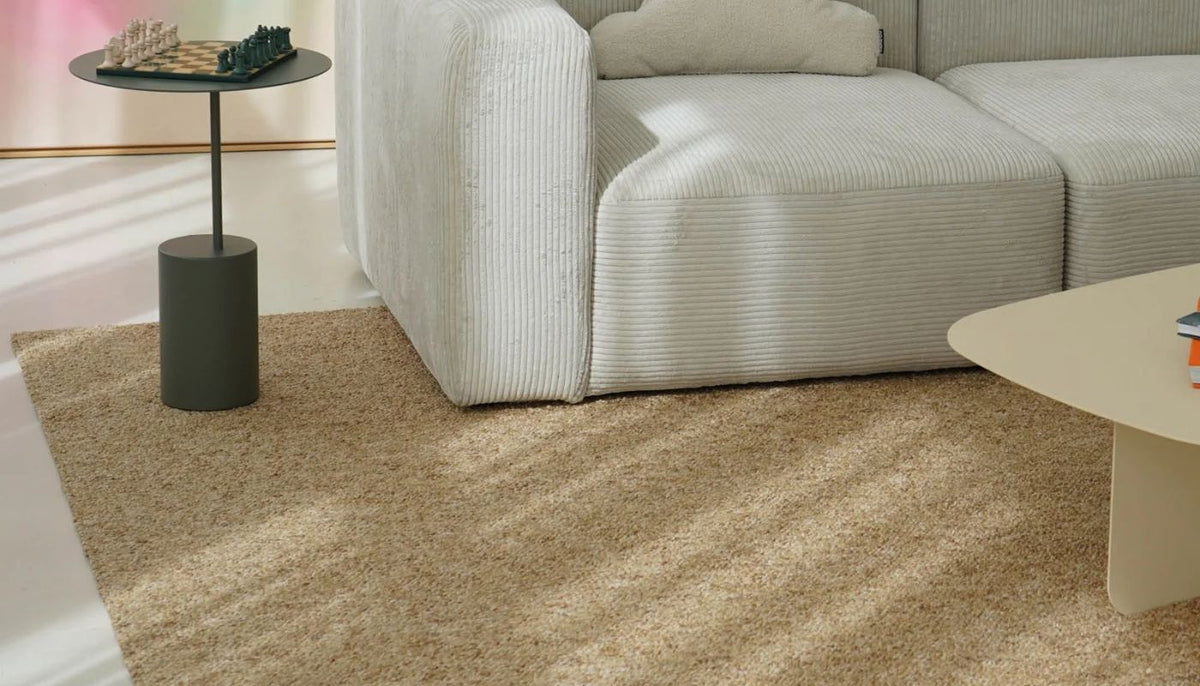
Every good layering starts with a solid foundation. Your base rug should be large enough to define the space. Neutral styles with a flat weave work particularly well here.
-
Material: Natural fibers like jute or sisal are classics for a base – at mokebo, we also call them 'Der Natürliche'. They're durable, timeless, and create a beautiful contrast with finer materials on top.

- Size: Make sure your base rug extends well beyond your furniture. At mokebo, we offer sizes like 200x290 cm that are ideal as a canvas for your layering.
- Color: Keep your base rug neutral. Beige, gray, or natural tones give you more freedom for the rug that goes on top.
The highlight: Placing your accent rug
On top of your base, place your key piece. Here you can be bolder. The upper rug is usually smaller and serves as a focal point.
Mix patterns and textures
An exciting look happens when you play with contrast. A graphic pattern on a plain jute rug looks modern and structured. If you prefer a minimalist approach, combine two solid-colored rugs with different pile heights – for example, a low-pile rug on top of a coarse weave.

Vary the shapes
Who says both rugs have to be rectangular? A round rug on top of a large rectangular one softens hard lines and looks especially charming in a reading corner. Organic shapes like faux fur (like our pouf 'Der Flauschige' as a matching piece in the room) bring dynamic energy to your setup.
Rug layering outdoors
The layered look doesn't stop at the terrace door. Outdoors especially, rug layering makes sense to bring that living room vibe outside. Our weather-resistant rugs like 'Der Natürliche' or 'Der Gestreifte' are perfect for this use.
Thanks to their non-slip backing, they stay in place even when you layer two together. Transform your balcony into a cozy lounge that stands up to wind and weather.

3 pro tips for the perfect layered look
To make your rug layering look professional, keep these three rules in mind:
- Avoid tripping hazards: Make sure the rugs don't pile up too thick on top of each other, especially in walkways. Use flatweave styles for your bottom layer.
- Stick to a color family: To keep it harmonious, your rug colors should echo the rest of your furniture and accessories.
- Keep proportions balanced: Your top rug should be about 30–50% smaller than your base so the layering effect stays clearly visible.
Conclusion: Embrace the layers
Rug layering is the easiest way to upgrade your home without replacing your entire interior. It looks personal, high-end, and shows you know your way around design. Just try it – with the right sizes and a touch of confidence, your floor will become an absolute showstopper.